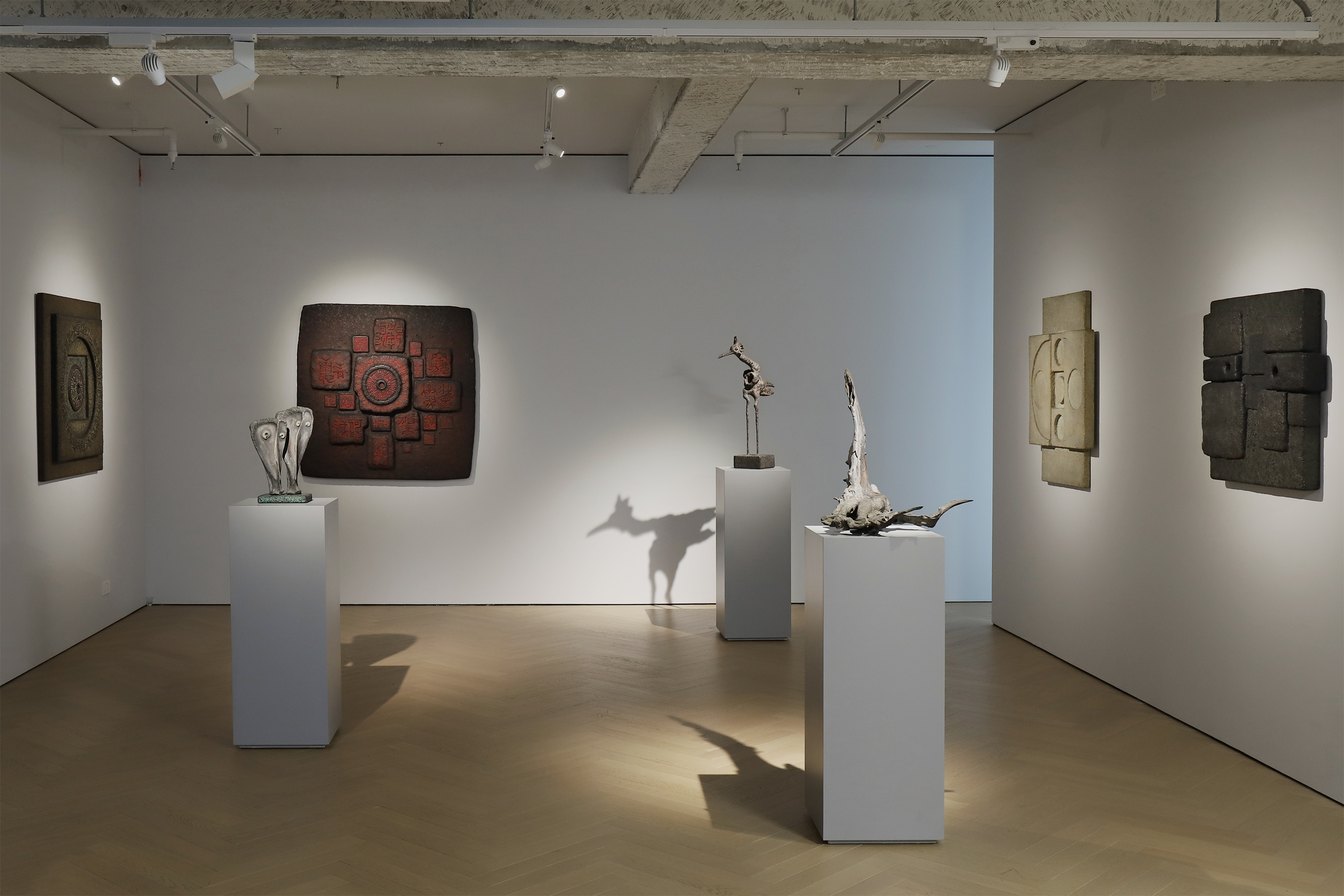
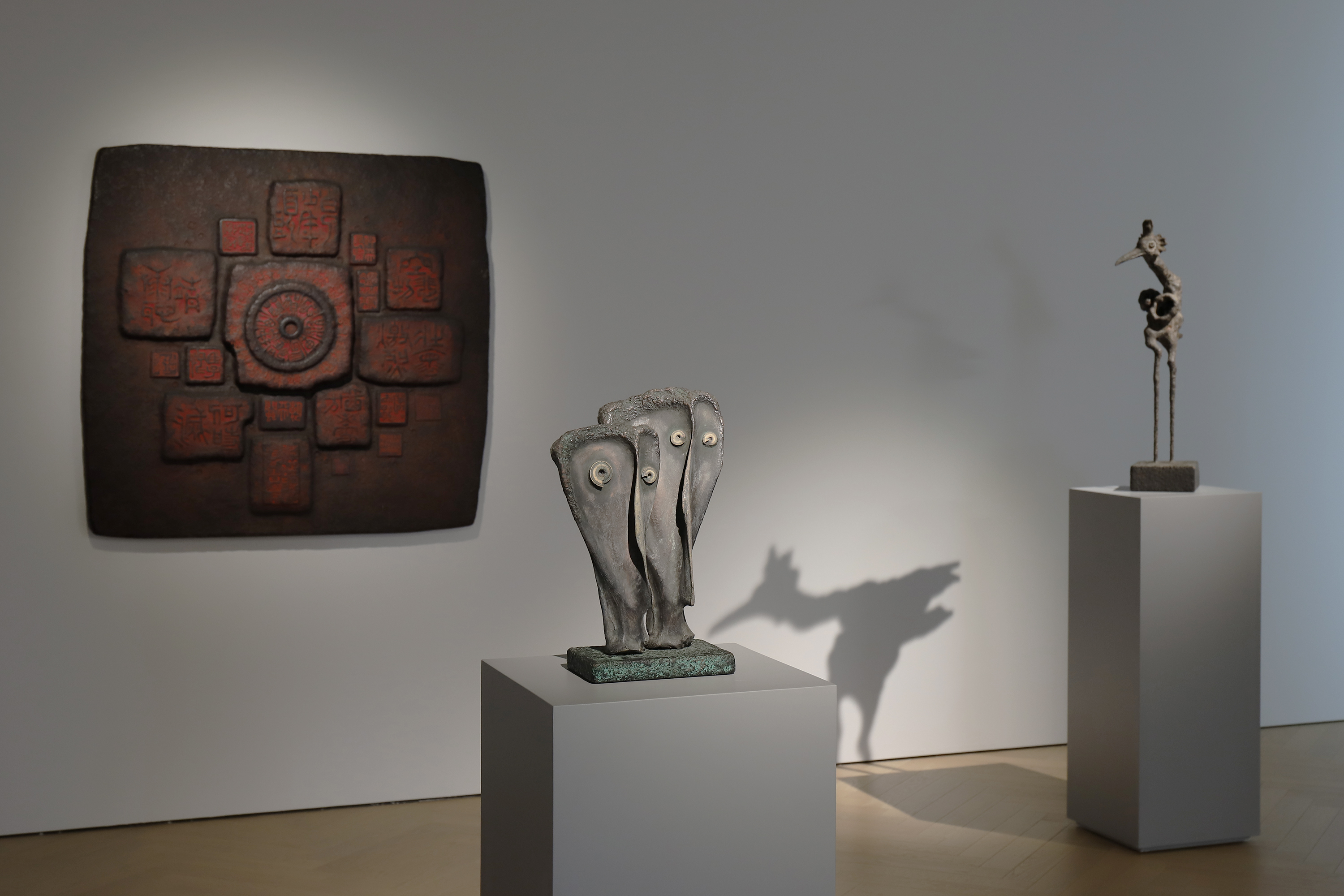
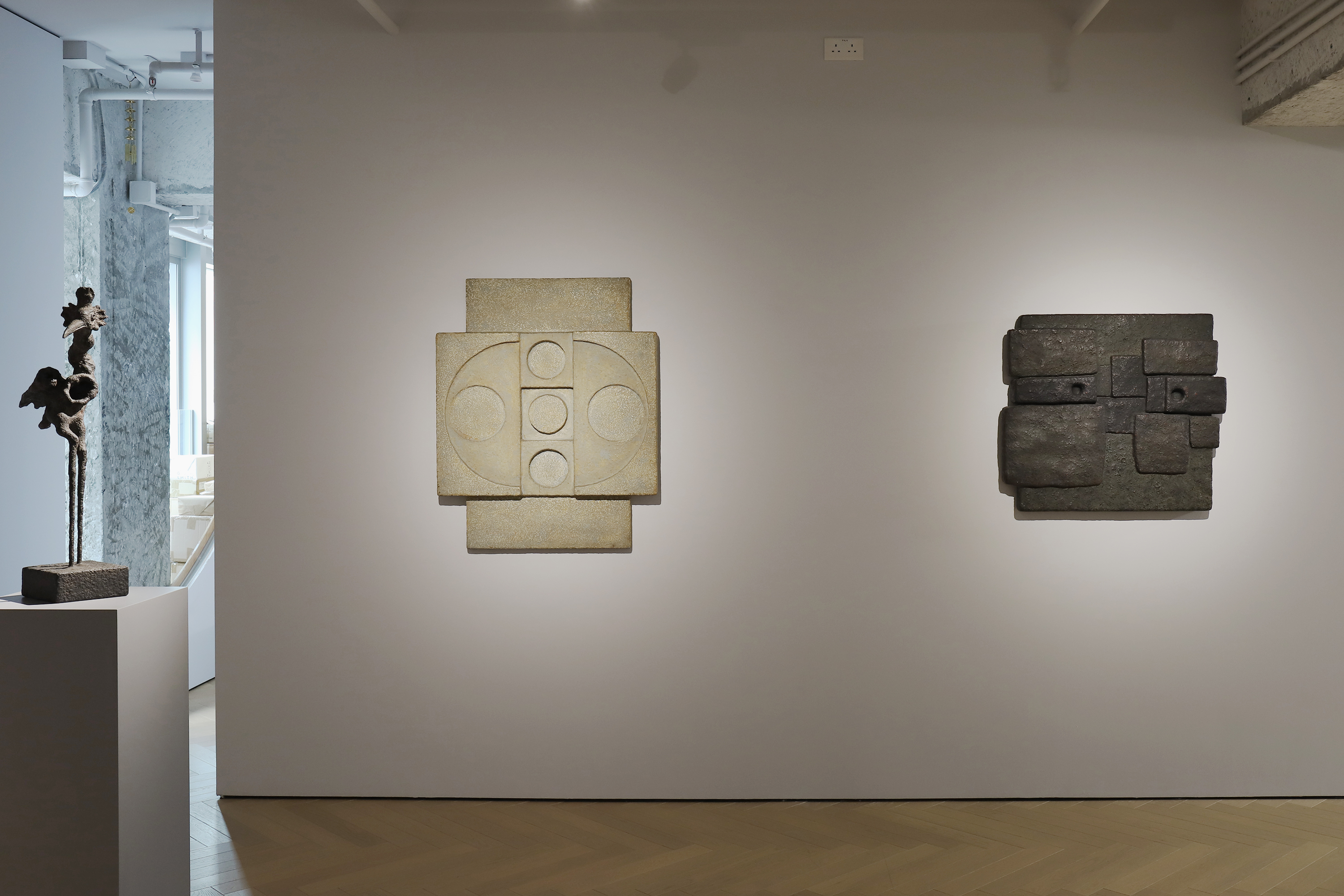
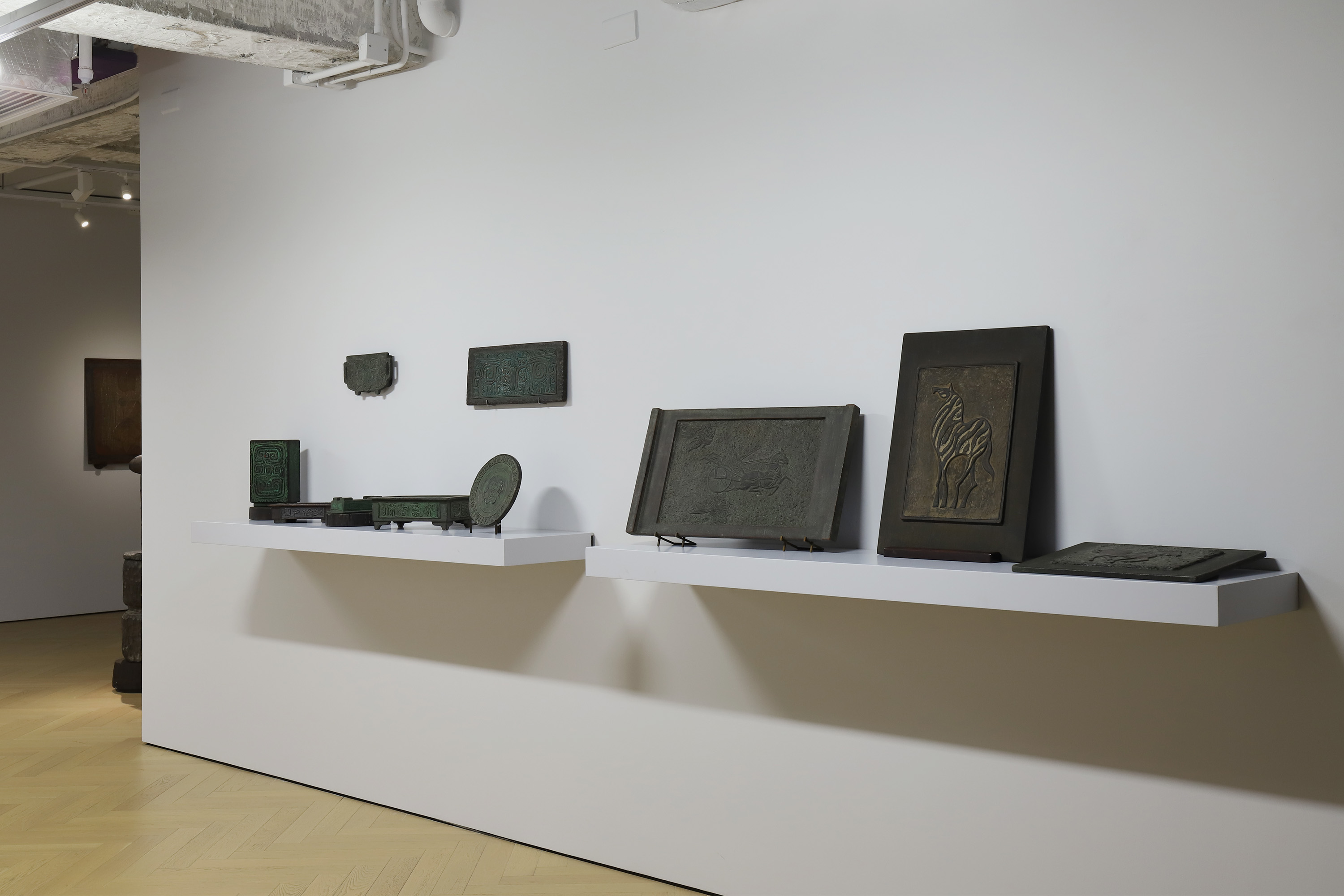
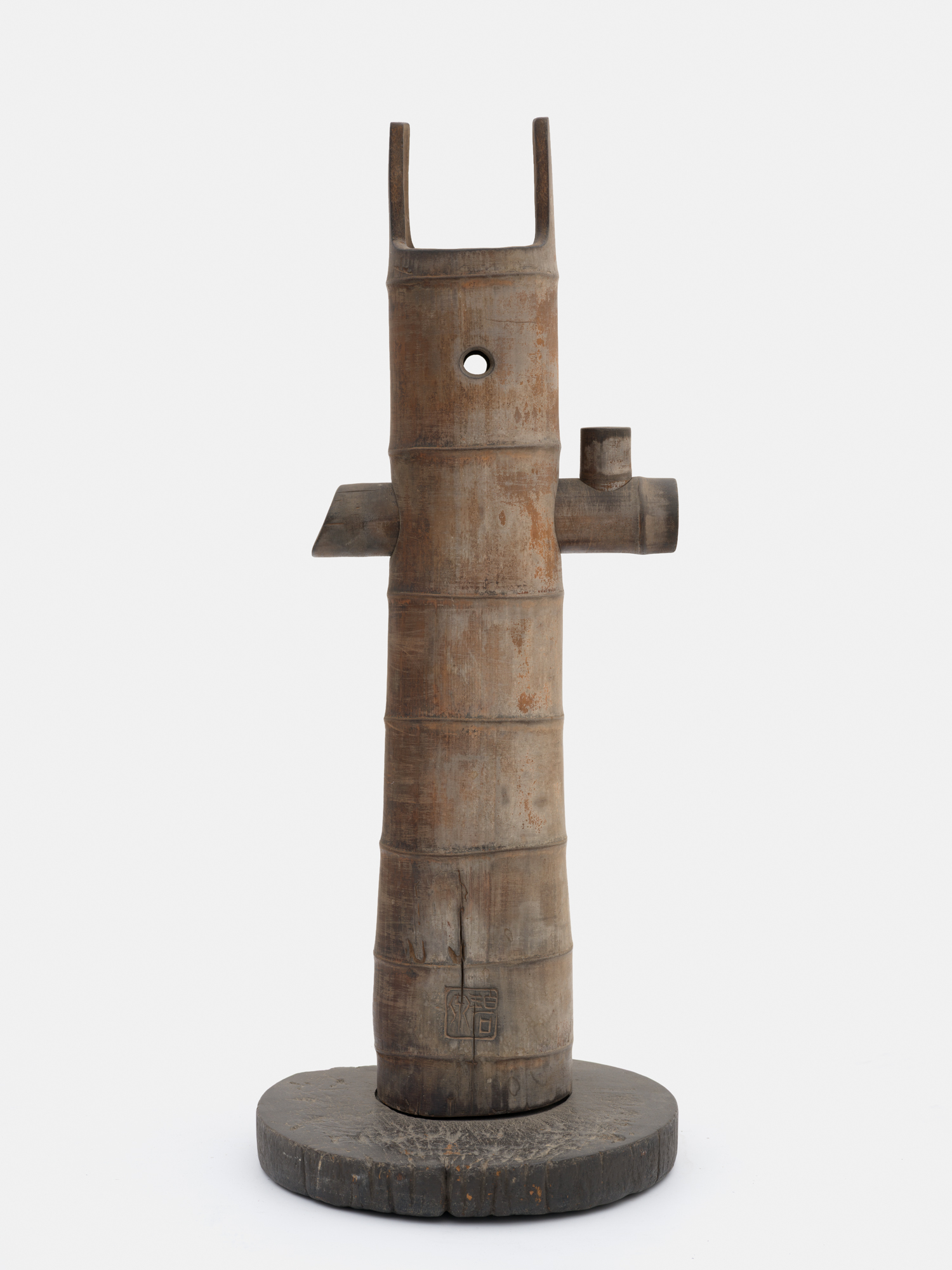
Rossi & Rossi Hong Kong is pleased to present Ha Bik Chuen: 1960s–70s, opening on 23 May 2026. The exhibition is dedicated to the rarely seen mixed-media sculptures and bas-reliefs preserved in the flat of the late Ha Bik Chuen (1925–2009). These works foreground his inventive materiality as well as his ability to transform industrial materials through a visual language informed by historical Chinese and modernist Western artistic influences.
Born in 1925 in the Xinhui District of Guangdong, the artist’s adolescent days in the coastal village of Sanzhaodao were uprooted in 1940, when his family briefly sought refuge in Hong Kong at the outbreak of the Sino-Japanese War. He later lost his father and older siblings to famine after the family returned to Xinhui in 1944. This tragic period preceded his entry into various crafts: at twenty, Ha apprenticed with a renovation contractor in Jiangmen, acquiring technical skills in woodwork, painting and glass lettering. Workshops hosted by the local church also taught Ha the art of paper flowers, laying the groundwork for his craft business, which started in Macau and eventually made its way to Hong Kong in 1957.
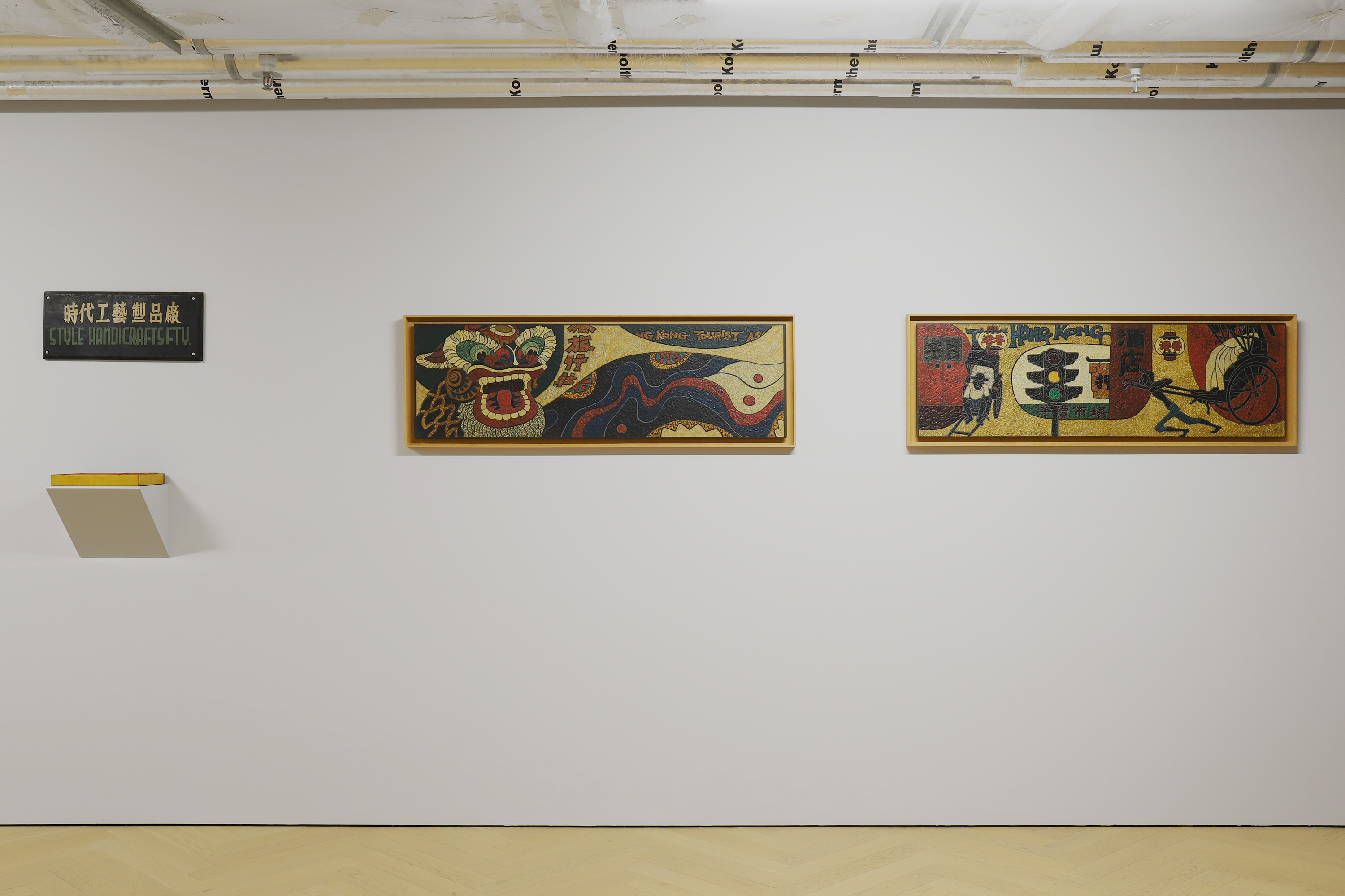
In the industrial district of To Kwa Wan, Ha set up the Style Handicrafts Factory on an eighth-floor walk-up. The space served as his working studio and living quarters for the remainder of his life until 2009; and in recent years, it was a storage space for his art and archive. As the rise of plastic in the early 1960s threatened the sale of Ha’s paper flower objects, he pivoted to bamboo baskets and decorative bas-reliefs, developing his own technique to mimic the aged texture of bronze and stone, which he then extended to his art practice later in the decade.
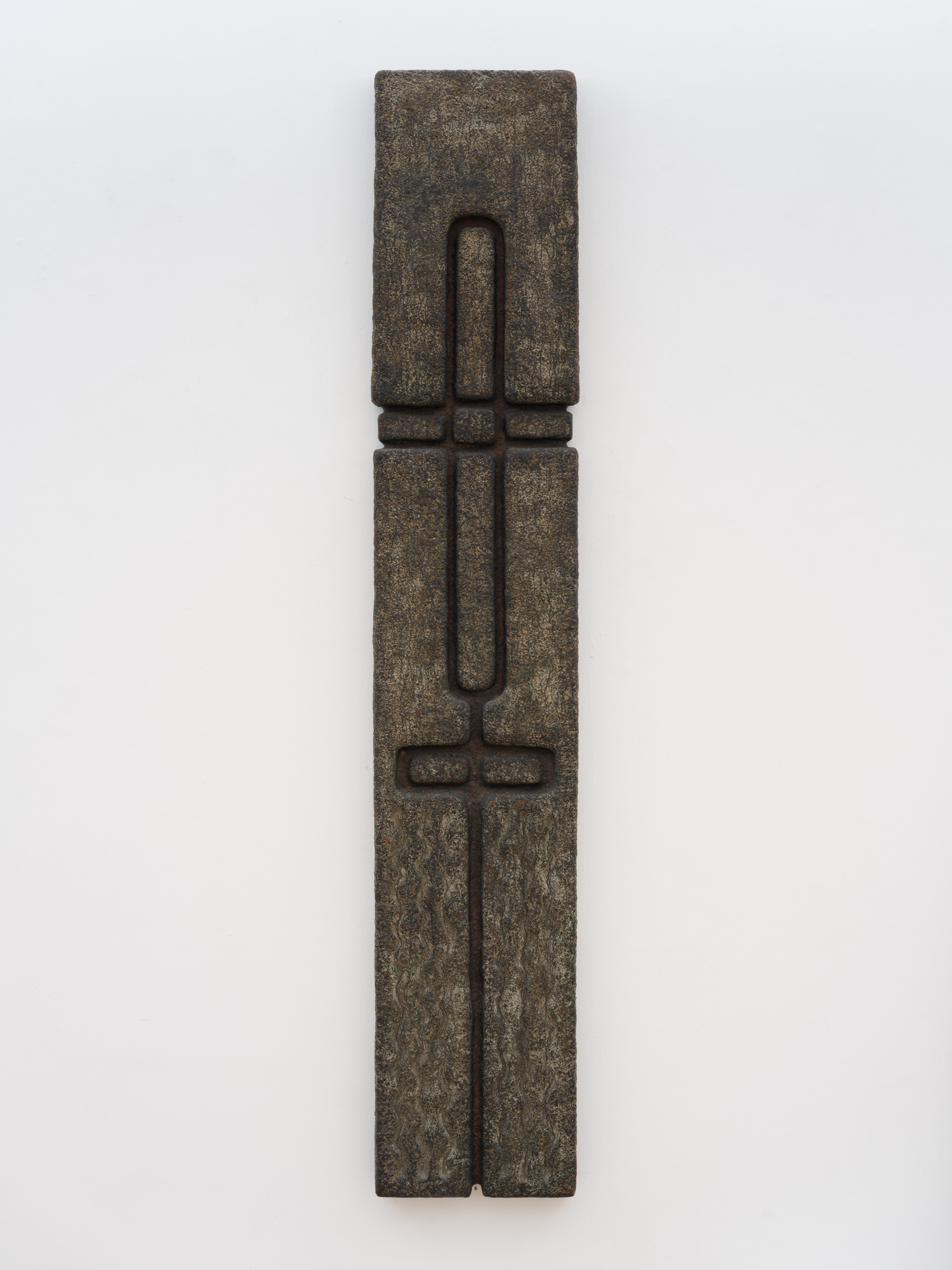
Layering industrial and enamel paint over a mixture of paper pulp, plaster, sawdust, sand and glue, Ha replicated the weathered surface and weight of ancient stone in The Whole River Red No.1 (1967), a work invoking the Chinese cosmological concept Tian Yuan Di Fang (‘Round Heaven, Square Earth’) with overlaid geometric motifs of circles and squares. Verses from the eponymous poem by the Southern Song dynasty general Yue Fei, expressing strong patriotic sentiments for the motherland, find physical form on Ha’s rugged, faux-stone surfaces.
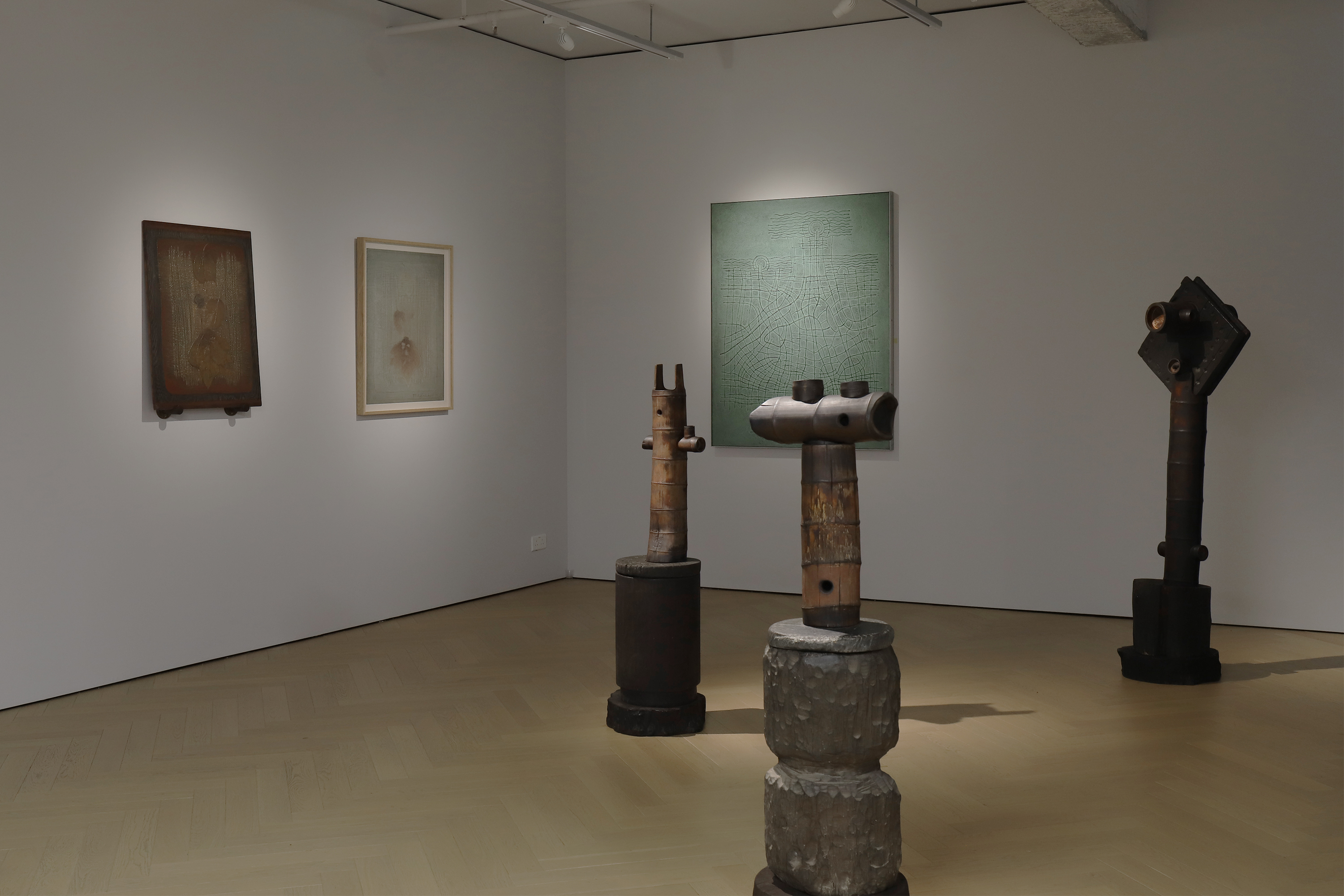
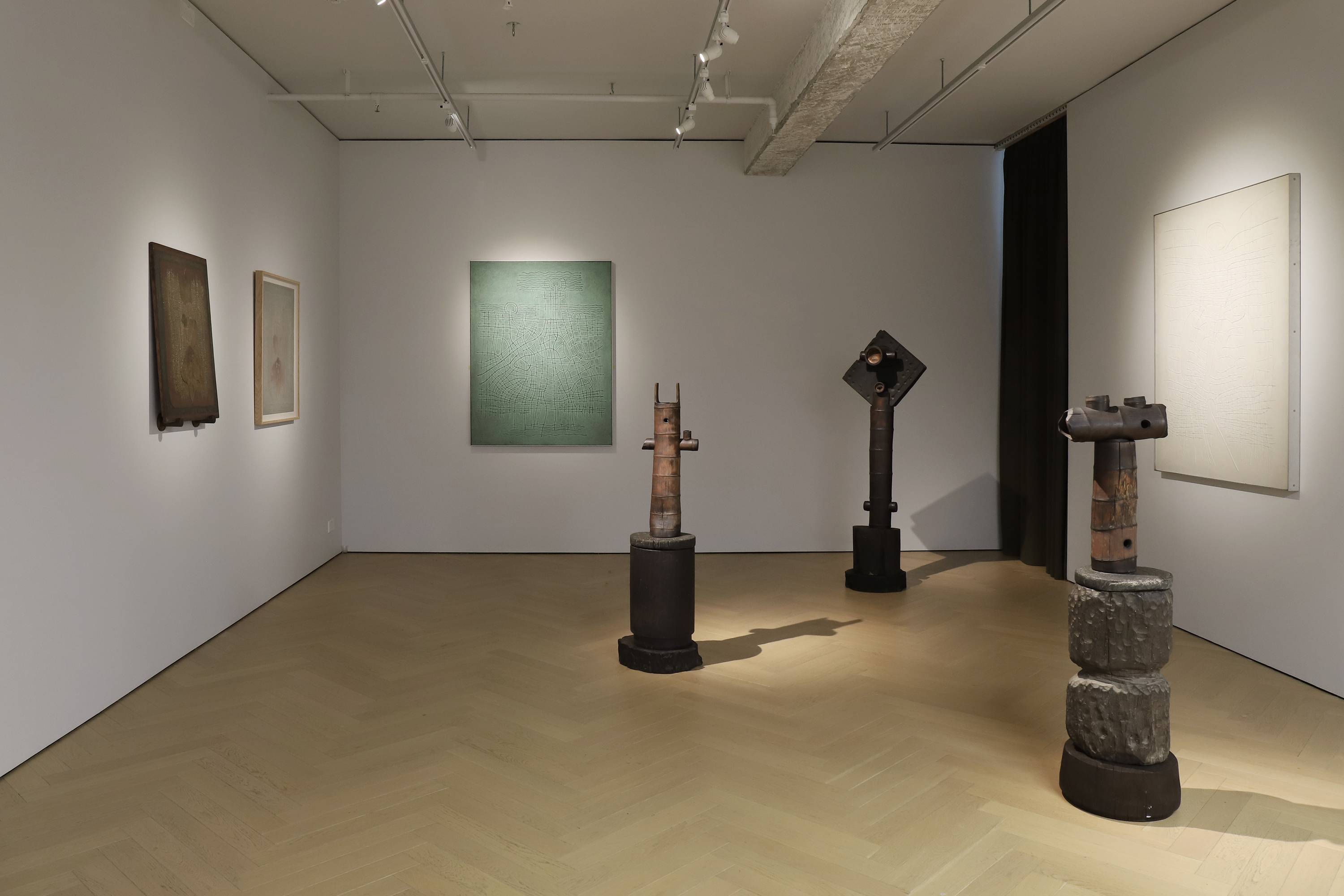
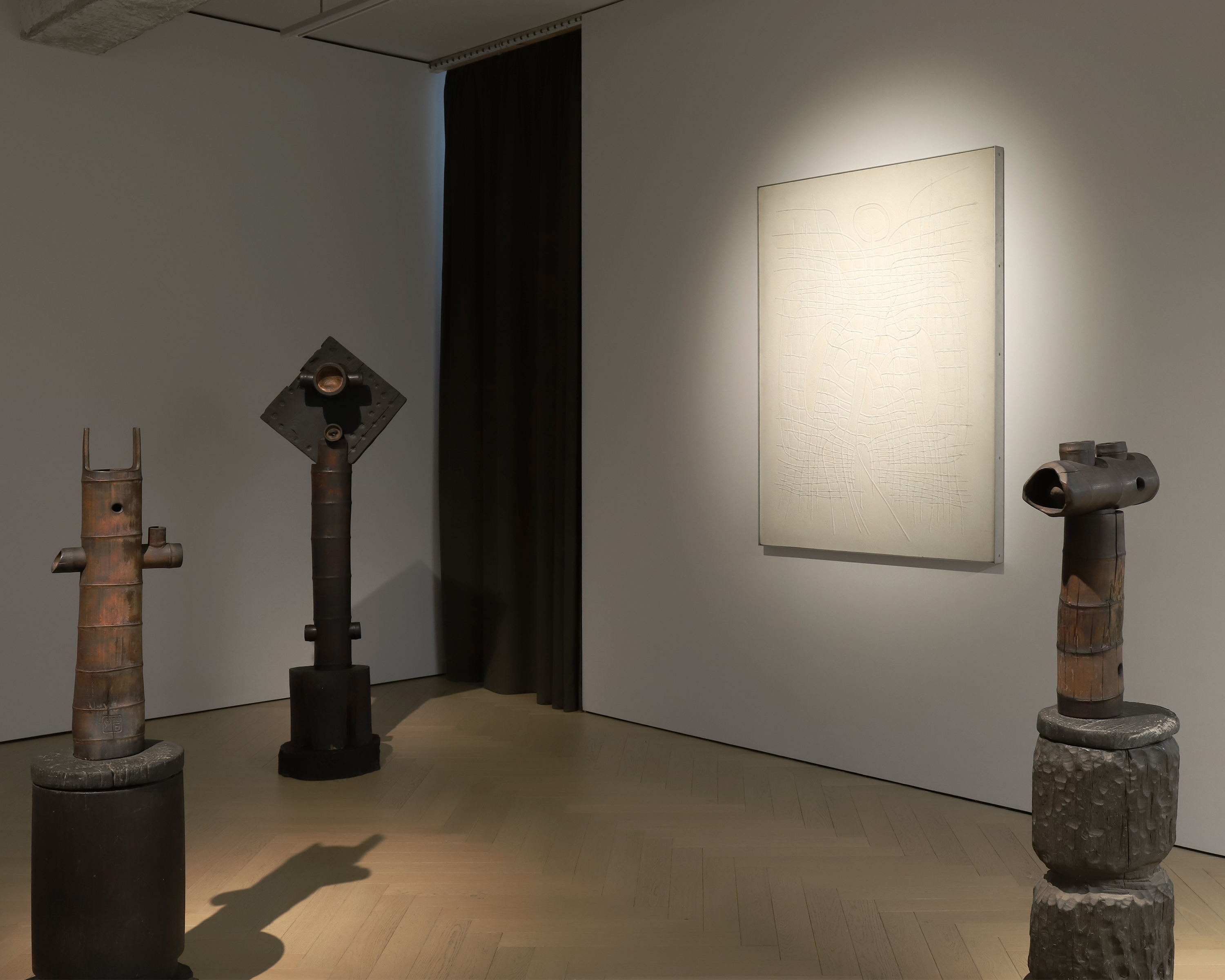
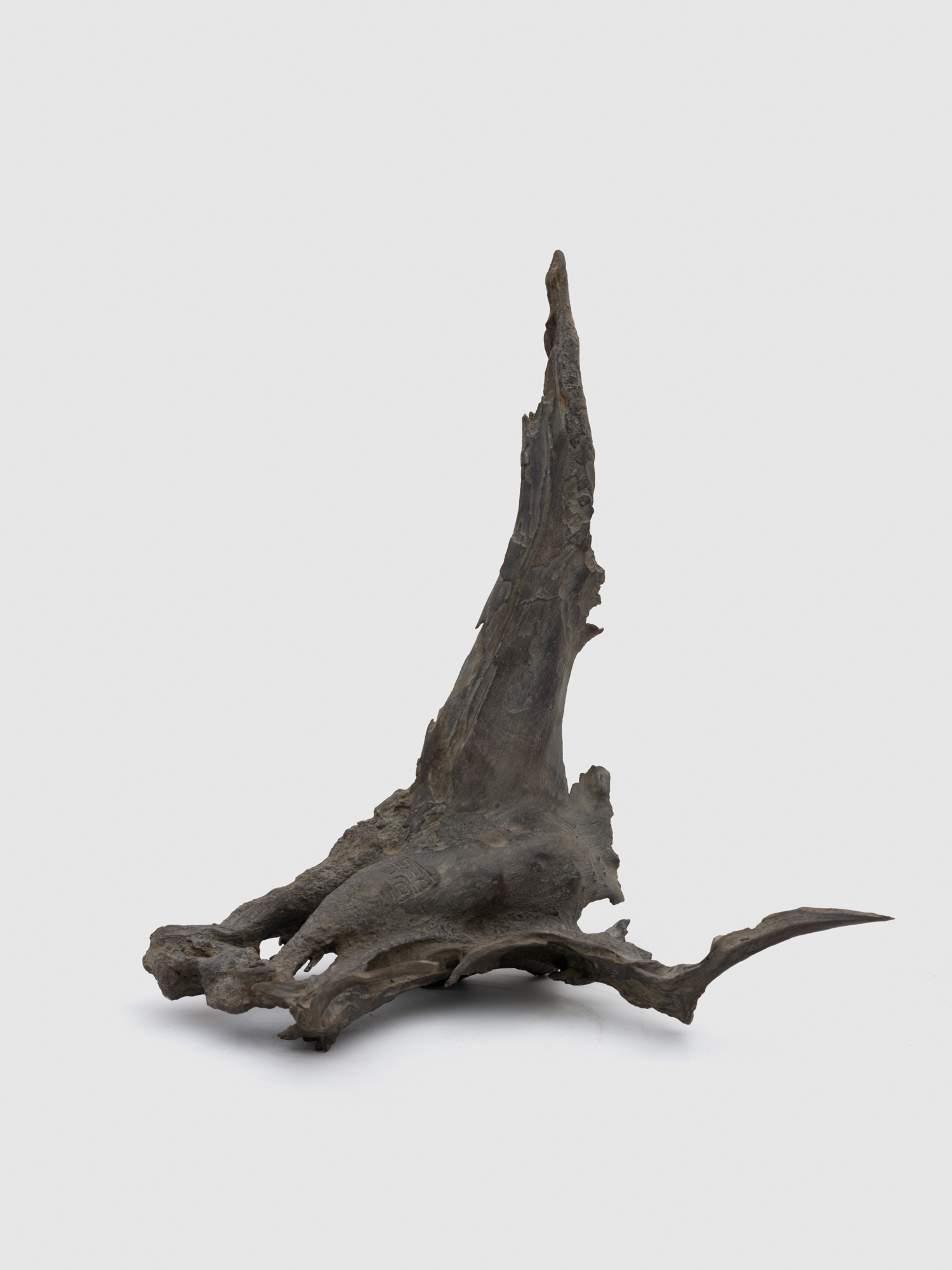
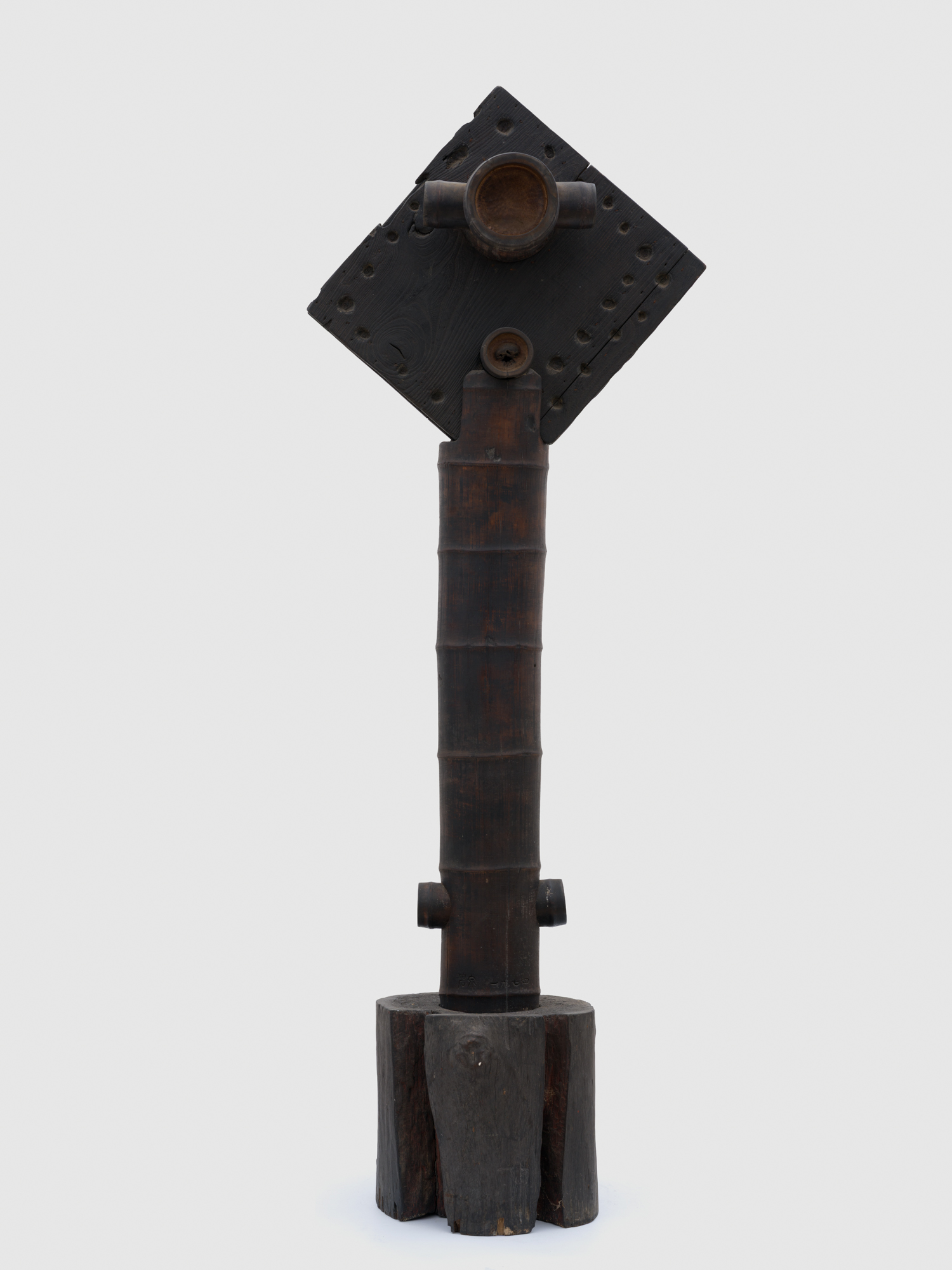
Salvaged, organic materials found residence in Ha’s studio. He was used to collecting driftwood, broken branches and fallen leaves as references for his paper flowers, and these tactile objects became the core of many of his sculptures. Untitled (1963) exemplifies this process of repurposing found materials: Ha’s distinctive faux-stone texture transforms the eroded curves of driftwood into the imagery of a bird’s wings and a boat’s sails. Bamboo, a scaffolding material easily accessible in the industrial district of To Kwa Wan, was also reclaimed by Ha to create anthropomorphic figures, as seen in Politician (1974). In it, a straight bamboo stalk is mounted onto a wooden base, supporting a diamond-shaped block to produce a form between figuration and abstraction. A surplus of industrial and natural materials join as assemblages, demonstrating the bricolage mentality at the heart of Ha’s practice.
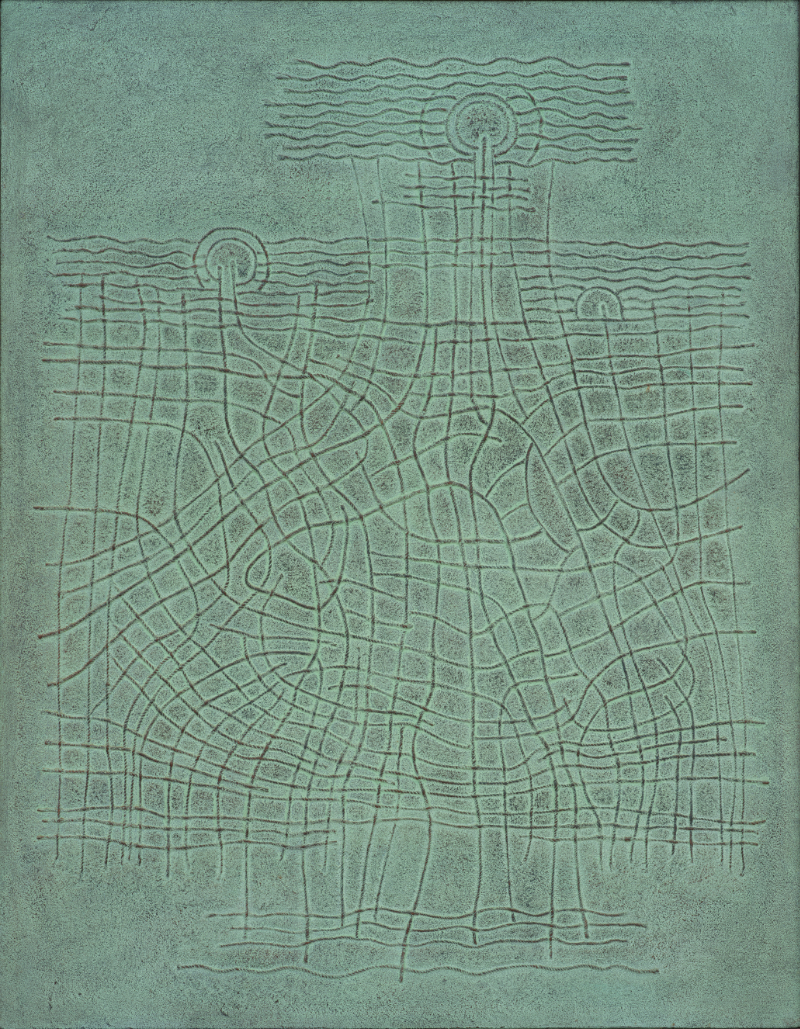
Towards the 1970s, his artistic creation became increasingly shaped by art books and catalogues he was purchasing from overseas. His work began to be preoccupied with a modernist language, a shift visible in Untitled (1960s), which features two elongated human figures with looping arms reminiscent of Alberto Giacometti’s slender bronze L’Homme au doigt (1947). Scene and Harmony (both 1977) – two works previously included in the 1977 Hong Kong Contemporary Art Exhibition organised by the Urban Council – combine his sensibility for material with abstract, modern forms. Outlining gridlike landscapes on wooden panels encased in paint and sand, the works evoke impressions of topological maps.
Ha Bik Chuen: 1960s–70s offers a rare window into the early career of the artist who navigated Hong Kong’s rapidly modernising environment. By collapsing the boundaries between fine art and industrial crafts, Ha created a body of work that remains a vital testament to the grit, curiosity and aesthetic ingenuity of mid-century Hong Kong.