For the past two decades, the internationally renowned art collective Slavs and Tatars have devoted themselves to a specific regional remit – which they define as ‘east of the former Berlin Wall and west of the Great Wall of China’ – comprising nearly a fifth of the Earth’s landmass. This expansive geography, like the collective’s name itself, serves as a rebuff (if not resistance) to reductive questions of identity plaguing the right and the left across the globe today. Their sculptures, books, installations and lecture performances celebrate a multilingualism and multiconfessionalism that make the otherwise daunting metaphysical inquiry – Who are you? – more joyful, irreverent and, alas, fluid.
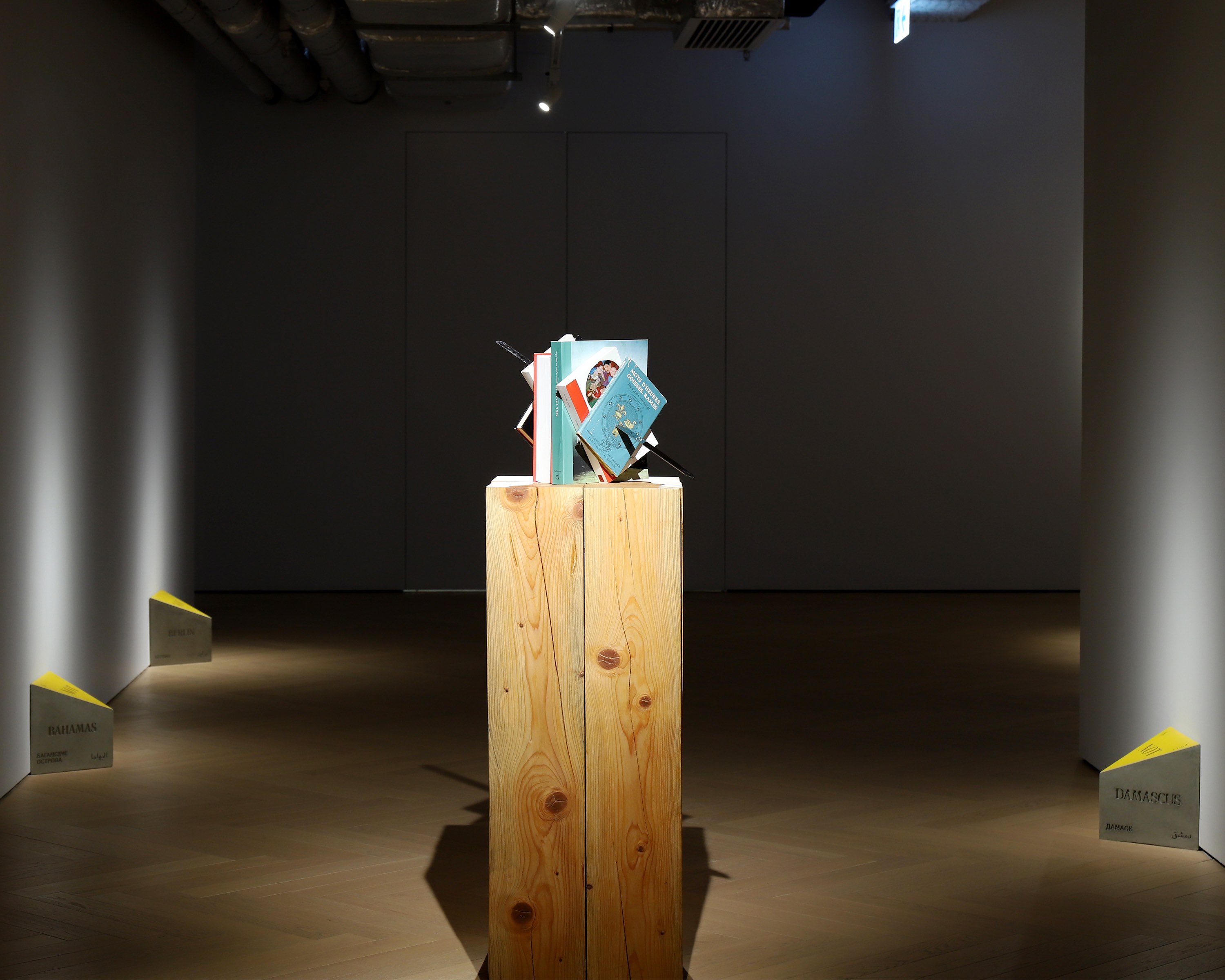
For their first solo exhibition in Hong Kong – titled 胡 (هو / who) are you? – Slavs and Tatars bring together works across different media that dance merrily around the idea of being and belonging. The presentation includes newly commissioned works from their Love Me Love Me Not series (2014), which features four cities whose names (and their respective alphabets) have fluctuated according to which empire, nation or ruler they belonged. Concrete sculptures resembling road signs – Not Berlin Not Bukhara and Not Bahamas Not Baghdad – refuse to commit to a given destination. Each work highlights a choice between the spiritual/sacred (Bukhara is known as the fourth-holiest city in Islam after Mecca, Medina and Jerusalem) and the secular (Berlin’s Berghain or the Bahama’s beaches, to start); but the artists choose not to choose.
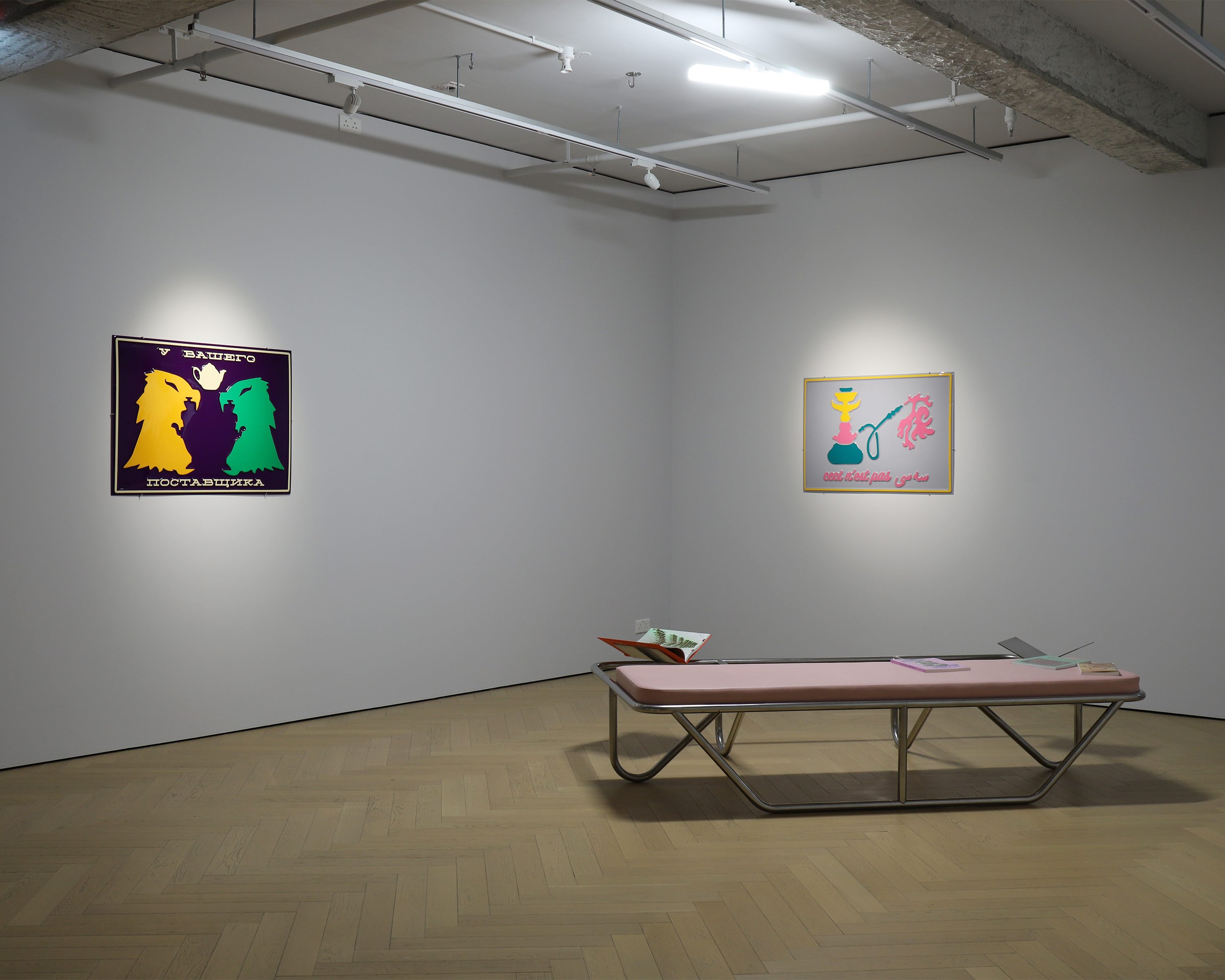
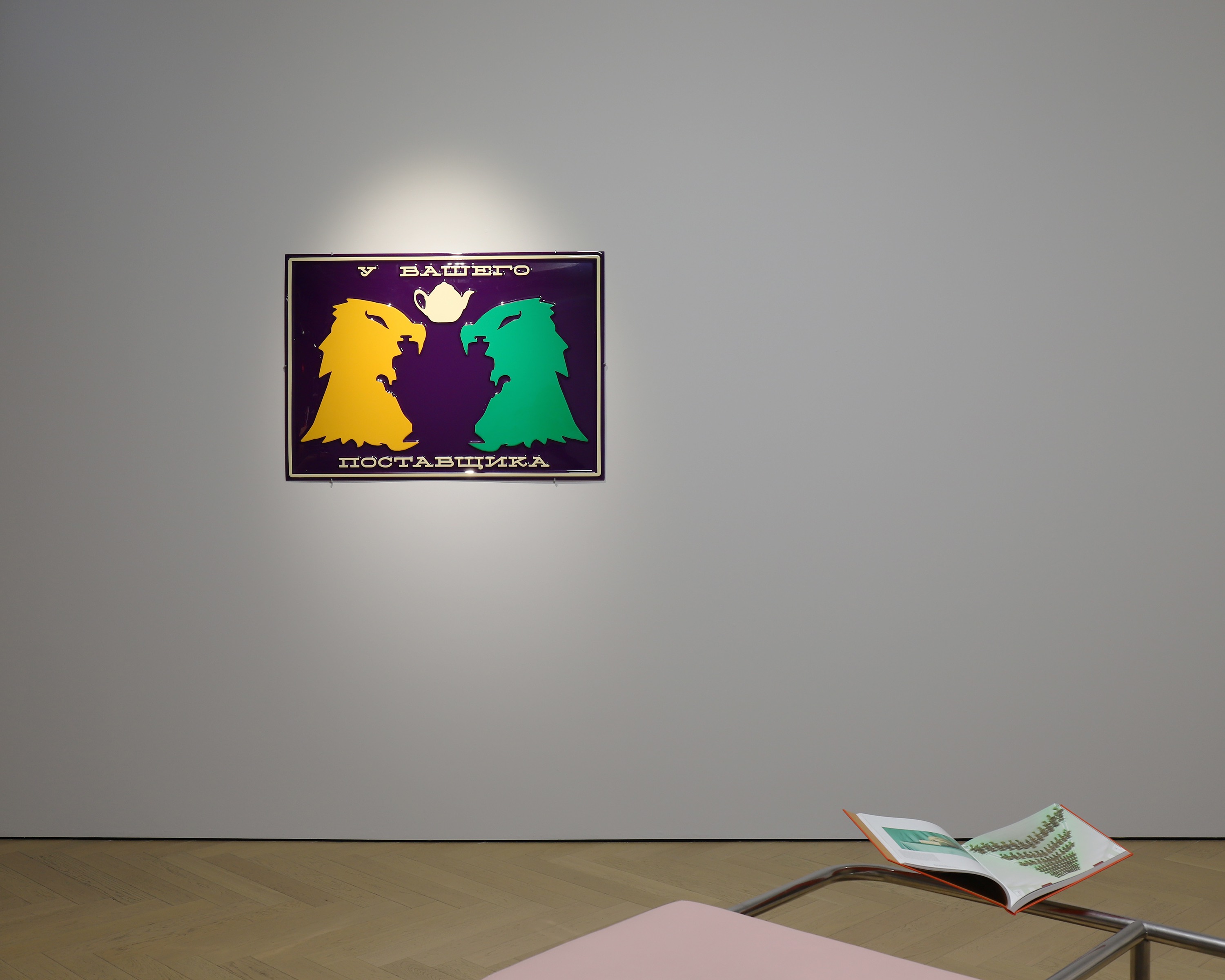
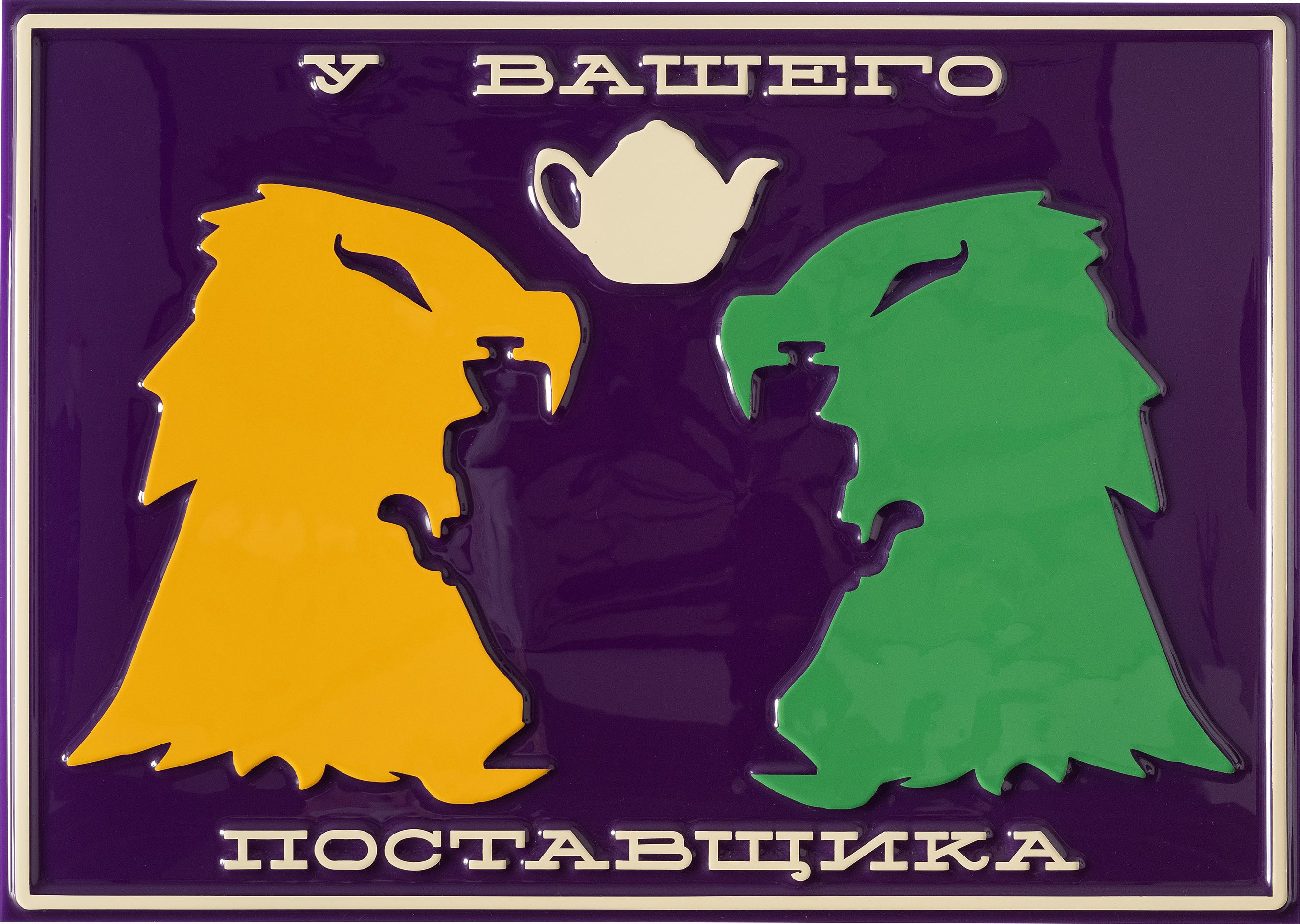
Two new vacuum-form panels, Samovar (2024) and This Not That (2024), revisit Marcel Broodthaers’s seminal work Musée d’Art Moderne, Département des Aigles (1968) by translating the eagle as a symbol of empire and order found across the Western world into a Simurgh, a similarly ubiquitous bird found across Turkic-Persianate Eurasia. Where the eagle has become shorthand for nationalism (think German, Albanian, Polish flags) or a type of toxic masculinity (the perpetually ripped macho American eagle), Simurgh is a bird of the next world, a gender-fluid creature with a flaming tail that one only encounters upon cancelling one’s ego, a final stage of divine Oneness. These panels form a red thread throughout the collective’s practice: with some fifteen in total, starting in 2009, they were shown in the main exhibition of the 58th Venice Biennale.
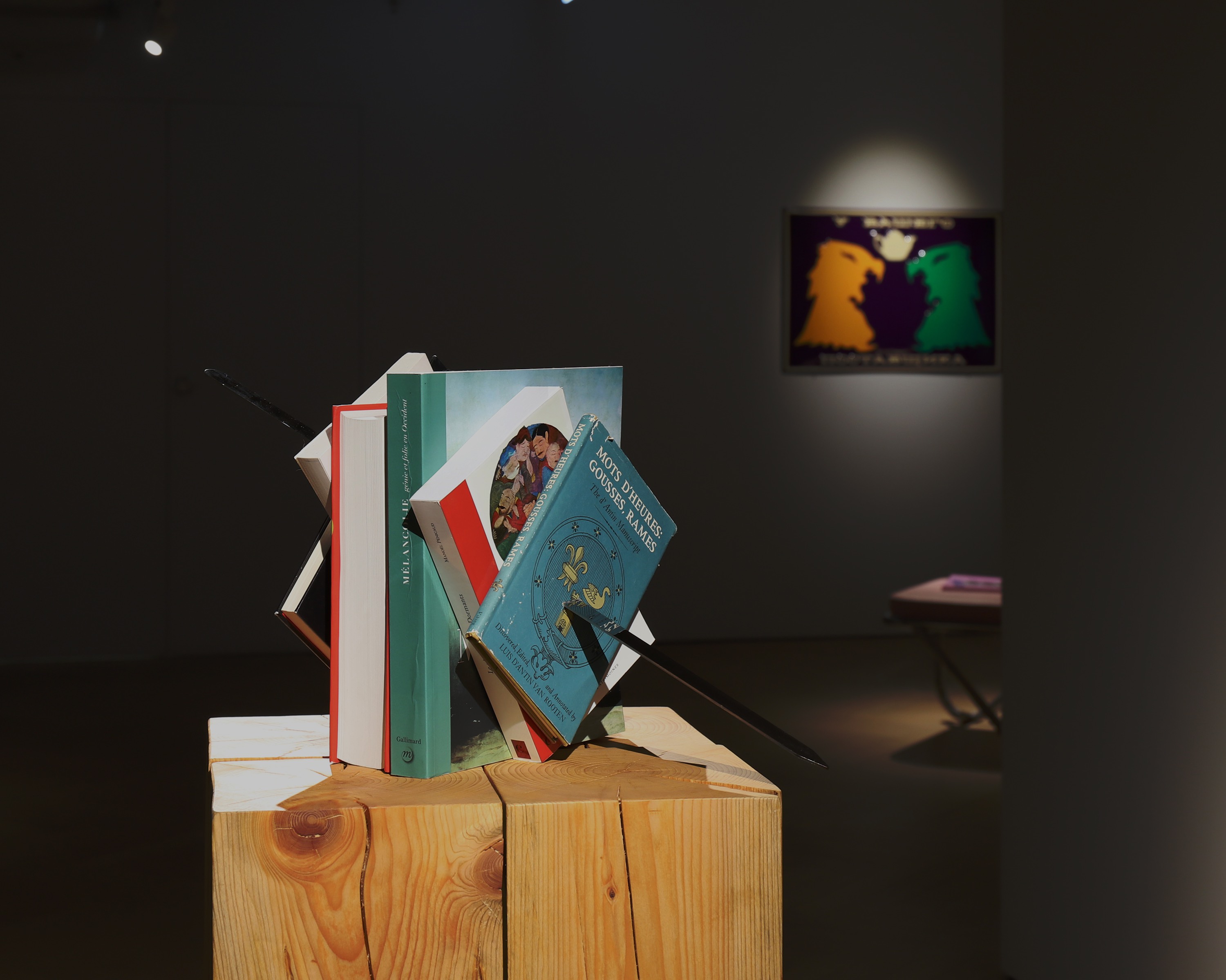
Publishing is central to the work of Slavs and Tatars, which has produced more than fifteen books in twenty years covering subjects as diverse as alphabet politics, satire in the Muslim world and syncretism in Central Asia. They have also created sculptures, installations and spaces of hospitality, such as Down Low Gitter (2018), for institutions across the globe where reading is reconsidered as a collective, performative, oral activity, rather than the intimate, silent and individual one we often take it for. The collective’s mix of high and low, religious and profane, historical and speculative has cleared new paths for contemporary discourse via a wholly idiosyncratic form of knowledge production, including popular culture, spiritual and esoteric traditions, oral histories and modern myths, as well as scholarly research. Perhaps none more so than Kitab Kebab (Fatima et Marie) (2020), a series of books skewered both literally and figuratively, begging us to consider intellectual and digestive nourishment as a single entity, not as separate ones.



_2011_Stockholm_view.jpg)